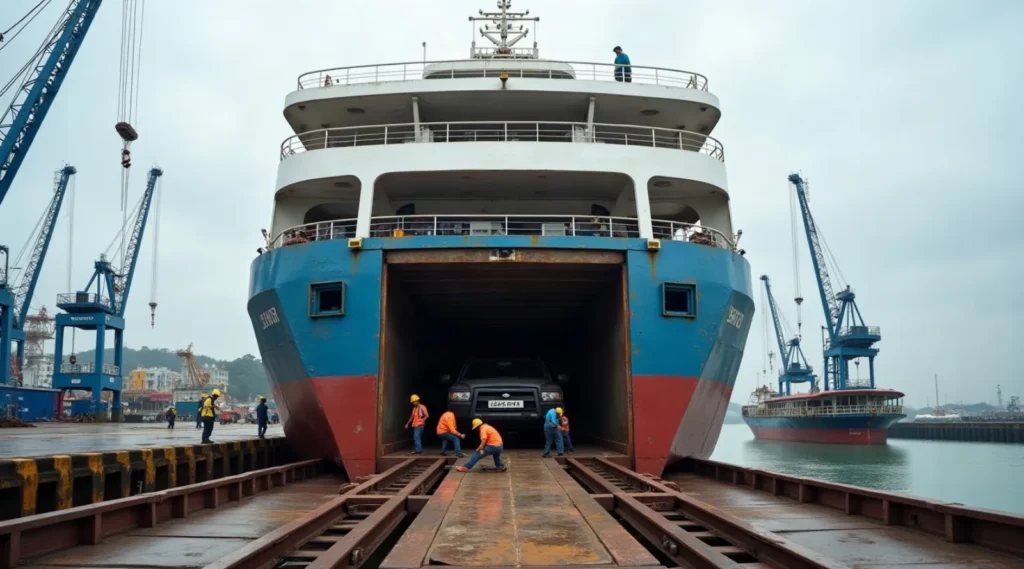
Docking a passenger ferry or Ro-Ro in Indonesia carries requirements that ordinary cargo tonnage never meets: stricter statutory survey scopes, ramp and vehicle-deck engineering, watertight-door and evacuation-system testing, and a schedule pressure unique to vessels whose route is a public service. Here is what Indonesian yards require from ferry operators, which yards handle this class of work, and how disciplined operators keep the dock stay short without cutting corners.
Why ferry dockings are their own discipline
Three structural differences from cargo dockings. Regulation: passenger vessels sit under the tightest statutory regime in the fleet — safety equipment, structural fire protection, stability documentation and evacuation arrangements are surveyed harder, and Indonesian authorities have progressively tightened enforcement on the national ferry fleet. Equipment: bow and stern ramps, vehicle-deck ventilation, hoistable decks and watertight doors are machinery that cargo ships simply do not carry, each with its own survey and maintenance needs. Schedule: a ferry off service is a route unserved; the commercial and social pressure to compress dock stays is constant, which makes preparation discipline — not haste at the dock — the only legitimate way to shorten the stay.
The ferry-specific work list
| System | Typical docking scope | Why it bites |
|---|---|---|
| Bow/stern ramps & doors | Hinge and cleat overhaul, seal renewal, NDT on structure, function tests | Safety-critical; corrosion hides in hinges |
| Vehicle deck | Steel renewal (deck wastage from vehicles + seawater), drainage, lashing points | Highest wastage zone on many ferries |
| Watertight doors | Overhaul, limit switches, remote indication tests | Witnessed statutory item |
| Evacuation systems | Slides/MES servicing, davits, boats | Certificated servicing windows |
| Fire systems | Structural fire integrity, dampers, drencher systems on vehicle decks | Survey focus area |
| Hull & machinery | Standard docking scope: steel, coatings, valves, shafts | As any vessel — see below |
Swipe the table sideways for every column
The standard underwater scope follows the normal docking pattern described in our dry dock & haul-out guide — ferries add the list above on top of it, not instead of it.
Which Indonesian yards handle ferries and Ro-Ro tonnage
Capability follows dock geometry and repair breadth. The vehicle-carrying fleet spans from small landing-craft-style short-crossing ferries to substantial Ro-Pax tonnage; the smaller end fits floating docks and larger slipways across the archipelago, while bigger Ro-Pax vessels need the major graving and floating docks of the main yard clusters on Java and Batam — the same facilities that serve mid-size cargo tonnage. Beyond lift capacity, the differentiators are: structural steel throughput (vehicle decks consume plate), machinery shops able to overhaul ramp hydraulics, and familiarity with passenger-ship statutory surveys so witnessed items are staged efficiently. The national capacity picture by dock type and LOA band is in the National Yard Register.
The operator’s playbook for a short, clean ferry docking
Four practices separate disciplined ferry operators from the rest. Survey alignment: stack statutory and class items into one stay, with the surveyor’s witness list agreed in advance — a ferry cannot afford a second docking because a damper test was missed. Pre-docking condition work: ramp seal states, deck wastage mapping and door function checks done in service, so the tender already contains quantities instead of discoveries. Spares on the quay: ramp seals, hinge pins, drencher heads and door switches ordered when the slot is booked — ferry-specific parts have long lead times in Indonesia. Route cover planned honestly: pressure to leave dock early is the enemy of finished work; operators who arrange substitute tonnage buy themselves a docking done once, properly. Where coating life drives the interval between dockings, the tropical-service maths in our antifouling guide applies with full force to ferries, whose duty cycles are unforgiving.
Supervision: the owner’s eye on a public-service asset
Ferry dockings concentrate risk: safety-critical systems, statutory witnesses, deck steel quantities that can double an invoice, and a timetable the public feels. Owner-side supervision earns its place by holding the yard to fit-up inspections before welding on ramp structures, verifying deck-steel remeasurement, sequencing witnessed tests so the surveyor’s day is used fully, and keeping a photo log the operator’s management and authorities can rely on afterwards. Our desk supervises this class of work across Indonesian yards with daily remote reporting — the wider method is described in the ship repair guide.
Planning a ferry or Ro-Ro docking? Send vessel particulars, ramp configuration and survey due list — the desk returns capable yards, slot windows and a USD estimate with the ferry-specific lines priced. WhatsApp +62 811-3941-4563 · bd@juaraholding.com.
Scheduling around the sailing calendar
Ferry dockings live inside a public timetable, and the yards that serve ferries well have learned to plan around it. Three scheduling practices matter. First, dock in the shoulder season for the route — national crossing demand peaks around the major holiday waves, and an operator caught in dock during Lebaran week has converted a maintenance event into a service crisis; the slot conversation with the yard should start from the route’s demand calendar, not the yard’s convenience. Second, sequence the fleet: multi-vessel operators rotate dockings so route cover comes from their own tonnage, which means the fleet docking plan is written a year ahead and each vessel’s survey windows are negotiated with class to fit it. Third, protect the return date contractually: agree the redelivery date with a defined daily rate for yard-caused overrun, and support it operationally by clearing long-lead items — ramp seals, door spares, drencher heads — before dock entry. None of this shortens the work itself; it removes the collisions between the work and the timetable, which is where ferry operators actually lose money. A ferry docking that ends on the promised day, with witnessed statutory items closed and the defect list at zero, is the product of the six months before the dock — not the two weeks in it.
Frequently asked questions
Which Indonesian shipyards can dock passenger ferries and Ro-Ro vessels?
Smaller ferries fit floating docks and slipways across the archipelago; larger Ro-Pax tonnage uses the major graving and floating docks of the Java and Batam clusters. The differentiators beyond lift capacity are steel throughput, ramp-hydraulics capability and statutory-survey familiarity.
What extra work do ferries need at docking?
Ramp and door overhauls with seal renewal and NDT, vehicle-deck steel renewal, watertight-door and evacuation-system tests, and vehicle-deck fire systems — on top of the standard underwater docking scope.
Why do ferry vehicle decks need so much steel?
Vehicle decks combine mechanical wear from traffic, trapped seawater and interrupted coatings — the highest corrosion rates on the ship. Wastage mapping before docking keeps the quantities, and the invoice, under control.
How can a ferry docking be kept short?
Preparation: aligned survey lists, pre-docking condition mapping, spares ordered at slot booking, and honest route cover so work is finished once, properly, rather than rushed and repeated.