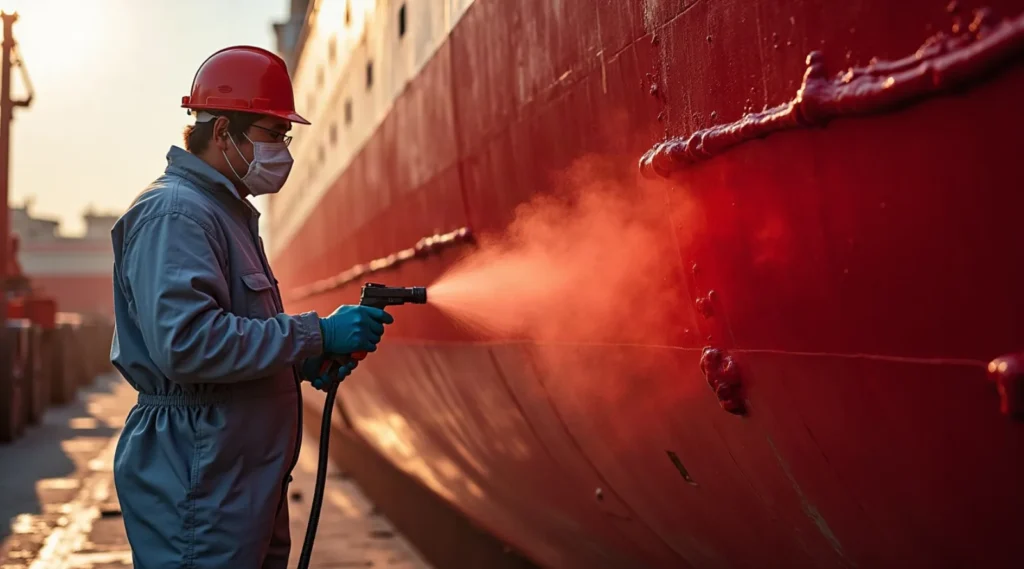
In Indonesian waters, fouling grows faster than the datasheets assume: warm sea temperatures year-round, high nutrient loads near coasts, and long idle periods at anchor shorten effective antifouling life — a system marketed for 60 months commonly performs 36–48 in tropical trading, and much less on vessels that sit still. This guide covers the coating types that hold up, the intervals that actually work here, and the application discipline at the yard that decides more than the paint brand does.
Why the tropics punish antifouling
Three mechanisms. Water temperature: biological growth rates climb with warmth, and the Indonesian archipelago sits in the band where barnacle and algal recruitment continues all year — there is no winter pause. Nutrients and light: coastal anchorages, river mouths and busy roadsteads feed growth; a vessel trading between such places collects fouling faster than an ocean-crossing ship. Idle time: self-polishing antifoulings need water flow to renew their surface; a liveaboard or workboat that spends weeks at anchor gives fouling a stationary target. The practical output of all three: fuel penalties arrive earlier than the coating warranty implies, and the economic re-coating point comes before the paint “fails” visibly.
Coating families and how they behave here
| System | How it works | Tropical behaviour |
|---|---|---|
| Self-polishing copolymer (SPC) | Biocide released as surface wears with flow | Workhorse choice; needs sailing time to polish |
| Controlled depletion (CDP) | Soluble matrix leaches biocide | Lower entry cost, shorter effective life |
| Foul-release (silicone) | Ultra-smooth surface; growth sheds with speed | Excellent on fast, active vessels; weak when idle |
| Hard/inert + cleaning regime | Durable film, mechanical cleaning | For vessels with dive-clean programmes |
Swipe the table sideways for every column
The honest matching rule: choose by operating profile, not by brochure. An active ferry benefits from SPC or foul-release; a vessel with long anchor periods needs the strongest biocide package it can justify plus a planned in-water cleaning cadence.
Intervals that actually hold in Indonesian service
Planning numbers we use at the desk, assuming sound application: active steel tonnage on SPC systems, 30–42 months of effective performance before the fuel curve argues for renewal — conveniently close to the class docking rhythm, which is why most owners simply repaint every docking; the docking cycle itself is covered in our dry dock & haul-out guide. Tourism and crew boats with high idle fractions: expect visible growth within 6–12 months and plan diver cleaning between slippings. Foul-release systems on fast active hulls: performance can genuinely reach the upper datasheet range, but one long lay-up can undo it. Whatever the system, the fuel log is the real gauge: a creeping speed-for-power loss of 5–10 percent is the coating telling you its effective life is ending.
Application at the yard: where the money is made or lost
Two identical paint systems can deliver wildly different lives depending on the dock week. The controls that matter: surface preparation to the specified standard — the difference between a spot-blast touch-up and full blast decides whether the new system bonds or peels; climate windows — tropical humidity and afternoon rain squeeze the hours in which priming is legitimate, and a yard that paints through drizzle is buying you blisters; dry film thickness (DFT) measured honestly — each coat gauged and recorded, not asserted; and stripe coats on edges and welds, where films thin and corrosion starts first. These are exactly the checkpoints our supervisors hold during dockings — the wider quality method is described in the ship repair guide. Underwater steel condition and coating interact directly with survey scope; if gauging is due, plan both together as set out in the hull replating timeline.
Budgeting: the fuel argument owners underweight
Antifouling is one of the few yard line-items with a direct, measurable payback. Fouling roughness raises fuel consumption — heavily fouled hulls can burn double-digit percentages more for the same schedule, and for a vessel bunkering weekly that penalty dwarfs the coating upgrade cost within months. When comparing quotations, price the system (preparation standard + specified coats + DFT verification), not the paint tin: an upgraded specification properly applied at an Indonesian yard remains a fraction of the fuel it saves. USD budget structure for the full docking, coating lines included, is in the docking cost guide.
Specifying a coating system for Indonesian service? Send vessel type, operating pattern and last docking records — the desk returns a system recommendation, yards with proven application discipline, and a USD estimate. WhatsApp +62 811-3941-4563 · bd@juaraholding.com.
A worked interval plan: three vessel profiles
To make the numbers concrete, here are three anonymised planning profiles from our desk work. Profile one, an active 68 m general cargo coaster trading Java–Kalimantan: SPC system renewed at every class docking (30–36 month rhythm), one diver inspection at mid-interval, no in-water cleaning needed in a typical cycle — fuel curve stays within 3–4 percent of clean baseline. Profile two, a 40 m crew boat on standby duty with long idle weeks: strong-biocide SPC plus scheduled diver cleaning every four months, and even then a slipway touch-up at 18 months proved worthwhile against the fuel and speed penalty. Profile three, a 50 m steel tourism vessel based around the Lesser Sunda islands, active in season and idle in the wet months: coating renewal every second year at haul-out, with propeller polishing each season — the propeller alone, left rough, cost more speed than the entire hull. The pattern across all three: the coating calendar is written by the operating profile and the fuel log, and the yard week that applies the system decides whether the calendar holds. Budget the upgrade, enforce the application controls, measure the fuel — in that order of importance.
Frequently asked questions
How long does antifouling last in Indonesian waters?
Active vessels on self-polishing systems: typically 30–42 months of effective performance — usually renewed at each docking. High-idle vessels see growth within 6–12 months and need in-water cleaning between dockings.
Which antifouling type is best for tropical waters?
It depends on the operating profile: SPC for active steel tonnage, foul-release for fast and consistently active hulls, and strong-biocide systems plus planned diver cleaning for vessels with long idle periods.
Does hull fouling really increase fuel consumption?
Yes, materially — heavy fouling can add double-digit percentages to fuel burn for the same speed. The fuel log is the most reliable indicator that a coating’s effective life is ending.
What matters more: paint brand or application?
Application. Surface preparation standard, climate windows, measured dry film thickness and stripe coats decide the coating’s real life; the best system badly applied underperforms a mid-range system applied with discipline.